Cash, Cargo, Cash
What is the wait between shipment and settlement worth?

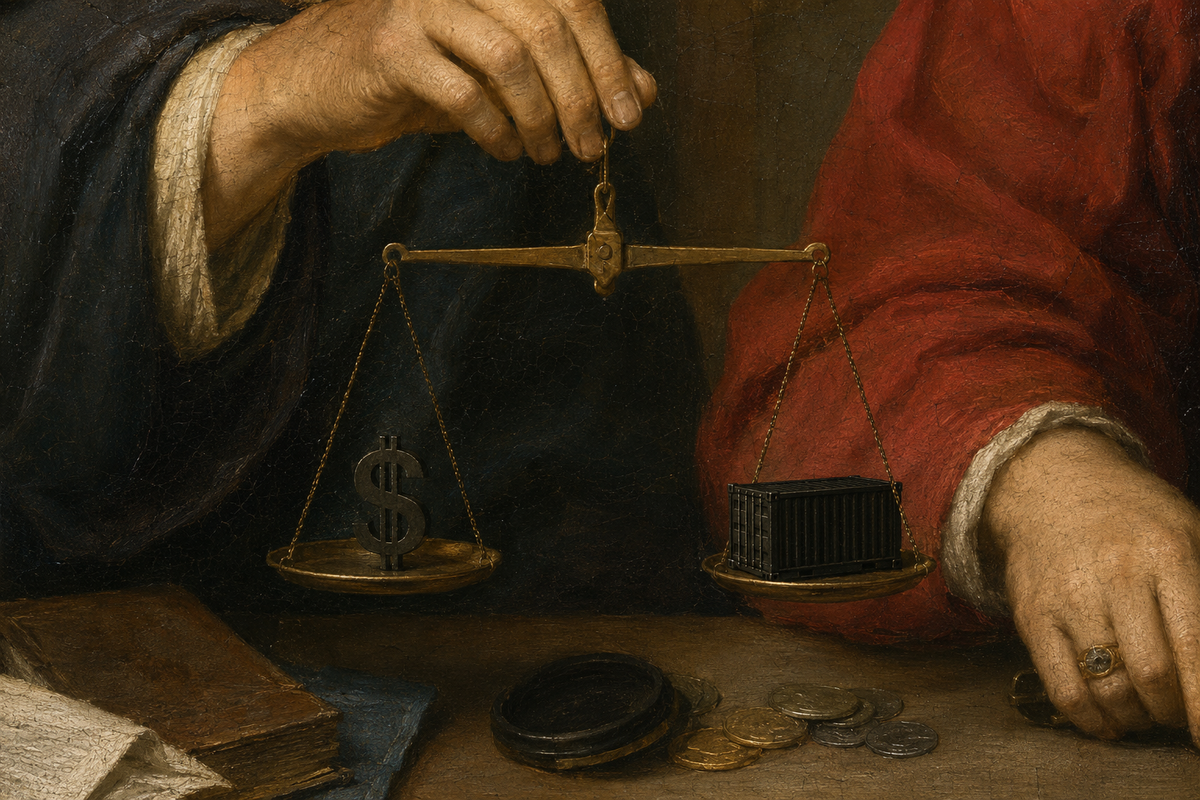
In today's edition we explore Kamino's latest yield product, which directs stablecoins into short-duration commodity trade finance through an off-chain lending structure. What do depositors hold, how does the underlying collateral change and what can slightly more than a month's worth of live data actually tell us?
Disclaimer
This report is made in collaboration with Kamino and is therefore sponsored. All editorial decisions, opinions and conclusions are our own and remain independent of any external influence.
Key Points
- The vault targets 7–8% APY on USDC — returns come from financing income on Commodity Loans that typically run for 1–3 months.
- The vault funds the wait between buying goods and collecting from the end buyer — each Commodity Loan is intended to be covered 1:1 by escrowed cash before funds are released or overcollateralized by goods purchased below their contracted sale price.
- kicUSDC represents a proportional share of the vault's net asset value — the depositor's legal claim is an unsecured loan to a separate entity called the Institutional Yield SPV, not a direct claim on the cargo.
- Withdrawals depend on available cash — requests within the vault's liquidity buffer can settle immediately, while larger requests wait in an on-chain queue as Commodity Loans mature.
- The vault is managing $44,822,547 across 719 holders — that shows early demand, not how the loan book will perform through a full credit cycle.
A commodity trader can have both sides of a deal arranged before a shipment moves. The trader signs one contract to buy the goods and another to sell them to an end buyer at a fixed price with the margin being agreed in advance.
The payments still arrive in the wrong order. The seller expects to be paid before releasing the goods, while the end buyer pays when the onward sale settles. The trader therefore needs cash for the period between those two events. That temporary funding need is working capital.
Commodity Yield lets depositors finance that gap through an on-chain vault connected to an independent off-chain lending operation. It is the first live product in Kamino's broader Institutional Yield family, with others still to come. Its mechanics follow the trade itself.
Somebody Has To Fund The Wait
Suppose a trader has agreed to buy a shipment of copper and resell it to an industrial buyer. The purchase price is lower than the contracted resale price, leaving a commercial margin inside the trade. Both prices are written into contracts before financing is provided, which is intended to substantially reduce open exposure to the copper price. The contracts do not remove the risk that a buyer fails to pay or that the two sides of the trade stop lining up.
The problem is timing. The seller wants proof that payment is available before handing over the copper. The end buyer pays later, once the shipment and its documents have been checked and the sale can settle. Without temporary financing, the trader either uses its own cash or lets the opportunity pass.
This is what the Commodity Loan provides. The lending operation advances the money needed to complete the purchase, then receives principal and financing income when the end buyer pays. Part of the trade's commercial margin covers that financing cost. Depositor yield is intended to come from this income rather than from token incentives or an open position in copper, oil, coffee or any other good.

Commodity Loan rates are set when each loan begins and stay fixed for that loan term. They can be renegotiated when a term ends and a new one begins. The depositor-facing APY is a separate number because the vault combines multiple loans and also keeps some cash available for withdrawals.
Kamino did not become the lender. The independent off-chain lending operation selects borrowers, originates the Commodity Loans and manages repayment.
The Short Window
Before money moves, the trader has both the purchase contract and the onward sale contract in place. Financing then enters a segregated escrow account or backs a letter of credit, which is a bank's commitment to pay the seller. At this stage, the Commodity Loan is intended to be covered 1:1 by cash.
The cash is not released merely because the shipment has left a warehouse. An independent party checks the goods and the lending operation receives the required documents. These can include invoices, proof of origin, transport records, insurance and certificates confirming the shipment's quality and quantity.
Once those conditions are met, the seller is paid and legal ownership of the goods passes to the fund. The collateral has now changed. Escrowed cash has become a physical commodity that was purchased below its contracted resale price and is intended to be worth more than the loan.
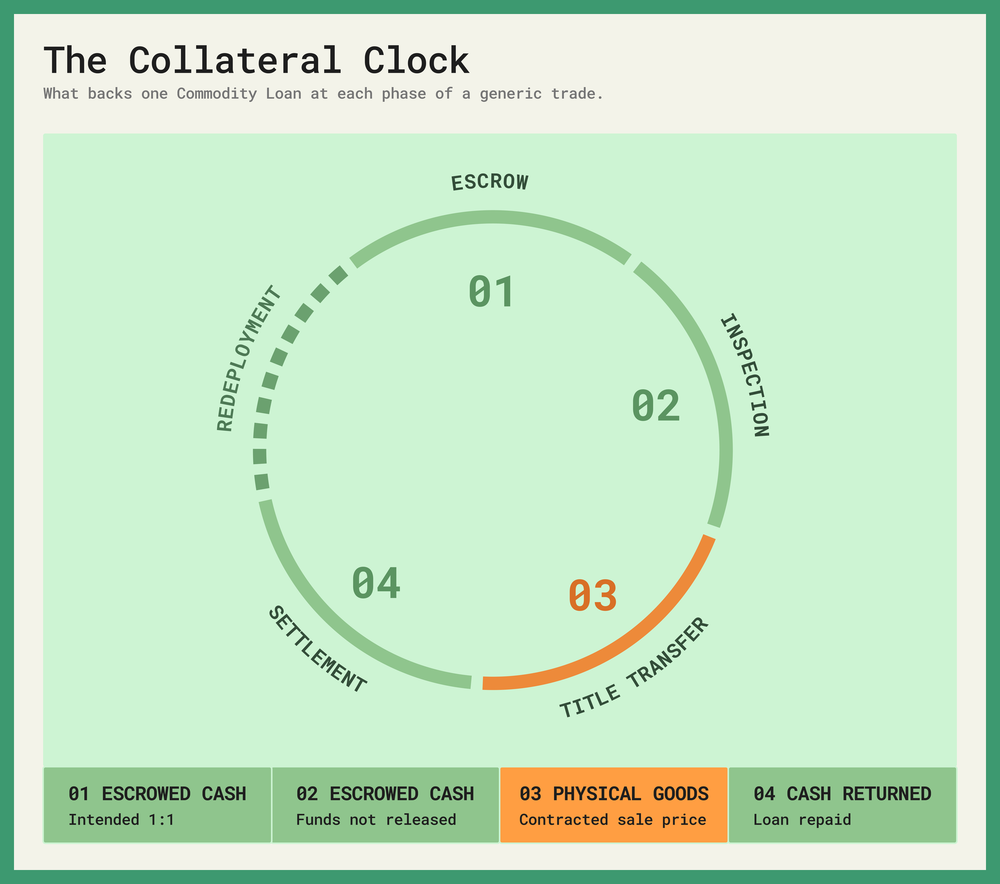
The fixed contracts substantially reduce open commodity price exposure while the buyer performs. A move in the spot price does not change the amount that buyer agreed to pay. Risk has not disappeared. The buyer can fail to pay, documents can be wrong or delayed and the purchase and sale terms can stop lining up as intended.
When the trade settles normally, the end buyer pays, ownership passes again and the proceeds return to controlled accounts. The Commodity Loan is repaid and the cash can meet withdrawals or finance another delivery. Cash becomes cargo, then cash again.
If the buyer does not pay, the fund is intended to retain ownership of the goods and seek another buyer. That gives it something to recover against, but a replacement sale can take time and may happen at a different price. Legal enforcement and logistics also have to work. The fixed contract limits the normal price risk. It cannot make every party perform.
What The Depositor Holds
The depositor never buys a slice of a copper shipment. Depositing USDC means receiving kicUSDC, a token representing the depositor's proportional share of the vault's net asset value. As financing income returns to the vault, the redemption value of kicUSDC can increase through its share price.
A special purpose vehicle (SPV) is a separate legal entity created for a specific purpose. Here, depositors enter a Loan Agreement with the Institutional Yield SPV, which sits between them and the off-chain lending operation. Capital travels from the vault through the SPV into the lending operation, while principal and interest travel back along the same route.
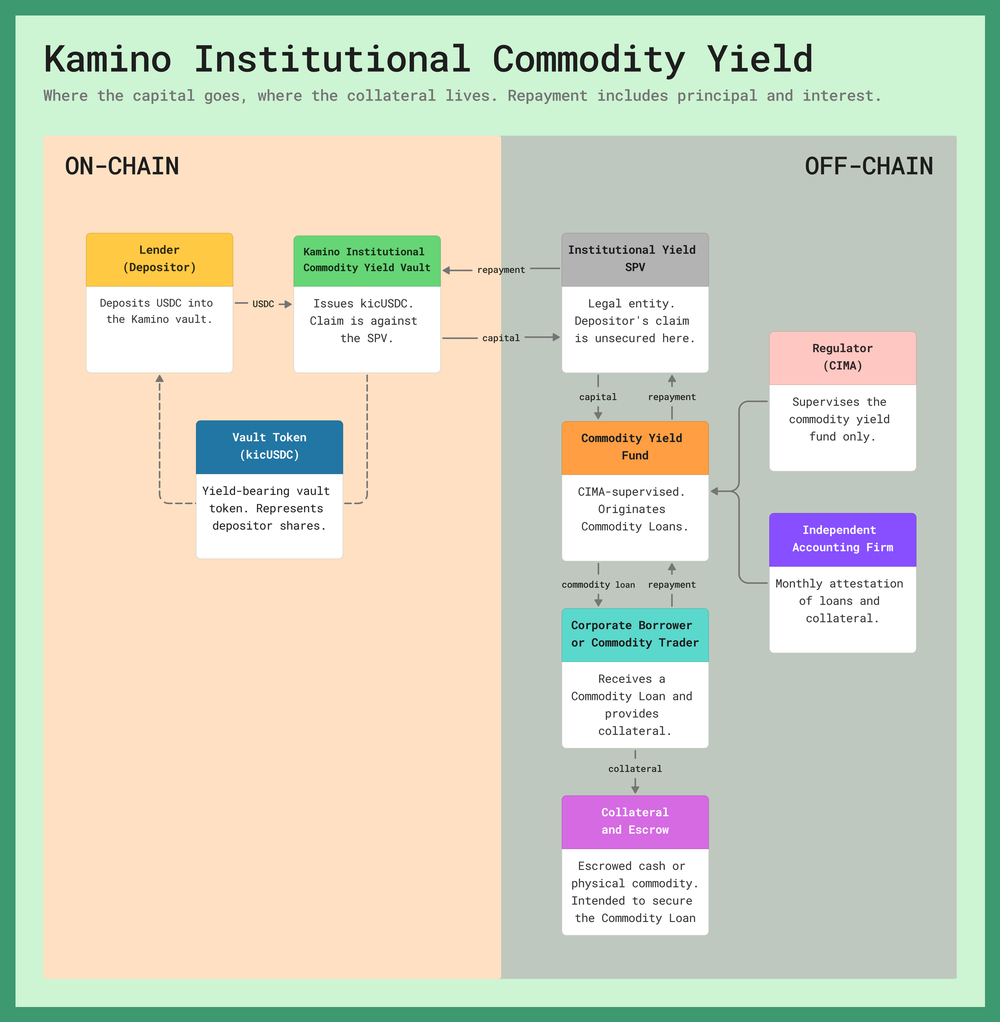
The depositor's loan to the SPV is unsecured. Depositors have no direct claim against the commodity borrowers and no direct security interest in the escrow accounts, goods or receivables supporting the Commodity Loans. That collateral protects the loans held below the SPV. If losses there cannot be recovered, the SPV has fewer assets and the value of kicUSDC can fall.
The off-chain lending operation is implemented through an approved fund supervised by the Cayman Islands Monetary Authority (CIMA), whose oversight applies to that fund, not to Kamino, the SPV, the on-chain vault or kicUSDC.
The product uses reporting to make the off-chain loan book more visible. The vault interface is designed to show each loan's principal, collateral type, contractual coverage and approximate maturity. At the September 21st snapshot, it still showed illustrative examples rather than live portfolio data.
An attestation is an independent check of reported facts against underlying records. The documentation says an accounting firm conducts one each month for the portfolio, covering loan balances and collateral records. It adds oversight but does not inspect every shipment or guarantee repayment.
Fast Money, Short Record
The vault had some liquidity prior to being accessible to the public, though it received its first material inflow of $1.465 million on July 30th, four days before Kamino announced the launch. It held $6.581 million on August 12th. Two days later, deposits had climbed to $26.986 million, more than quadrupling in 48 hours.
Demand kept running into the ceiling. The vault's deposit cap changed several times as deposits rolled in, but by the 7th of September, 526 holders had filled it to roughly $32 million. The cap then rose to $52 million on September 15th. By September 21st, the vault held $44.82 million across 719 unique addresses, leaving room beneath the enlarged ceiling. Since deployment, that capital had generated 258,335 USDC in cumulative interest.
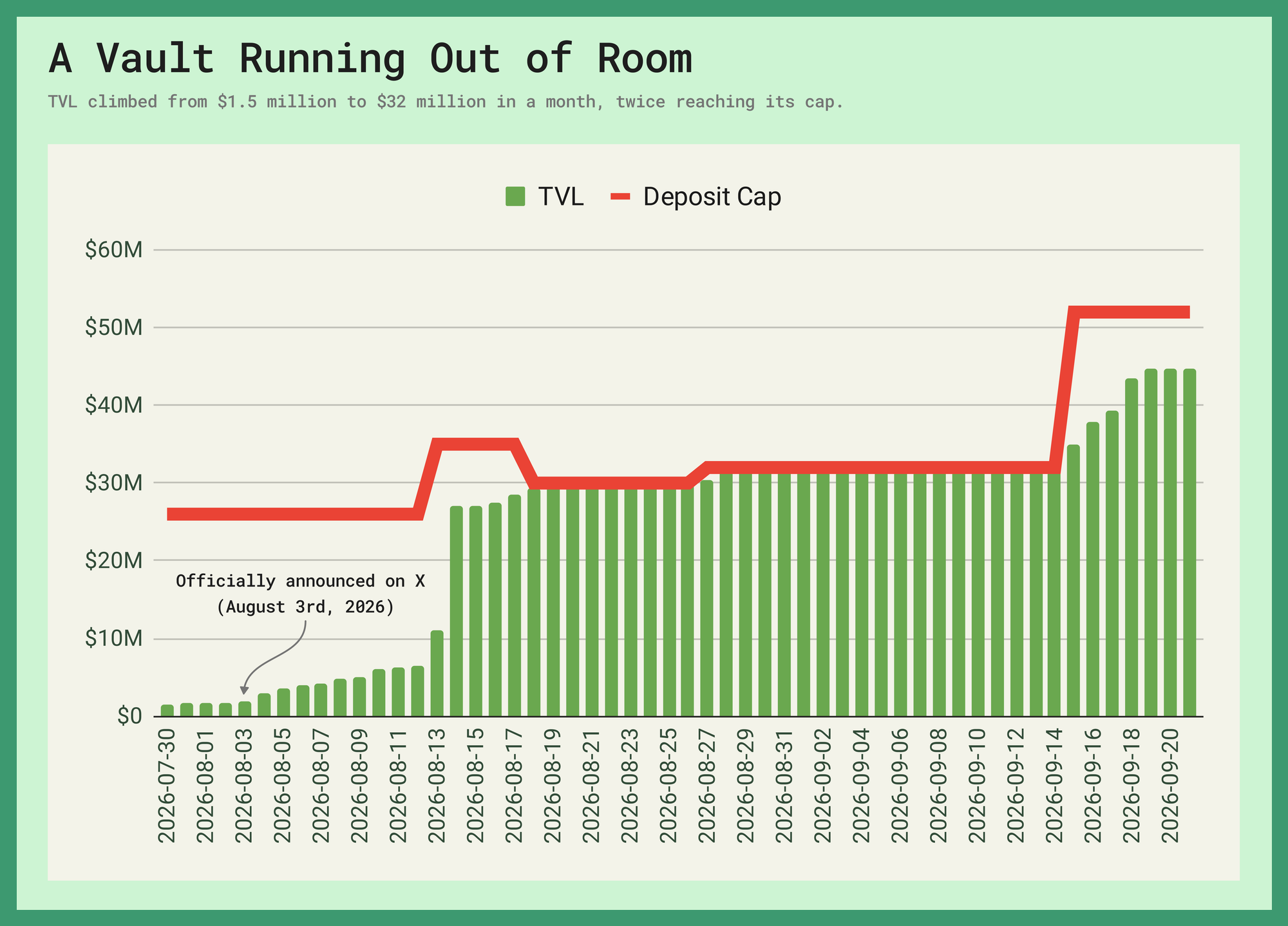
The moving ceiling could reflect a constraint on the other side of the vault. Undeployed assets earn less, so taking in more capital than the lending operation can place into Commodity Loans would dilute returns across the vault. In that reading, the cap keeps deposits closer to deployable lending capacity, although the chain does not reveal the lending operation's internal target.
That push and pull between accepting capital and putting it to work eventually reaches the depositor, helping explain why the vault's APY can vary even if the public data cannot isolate the cause of each move. On September 21st, the API-reported trailing 30-day APY stood at 7.56%. Across 54 dated observations from July 30th, reported vault APY ranged from 6.27% to 8.53%, exceeding 8% on 21 observations. The historical series reached its lowest reading on September 18th and remained below 7% through its latest observation of 6.41%.
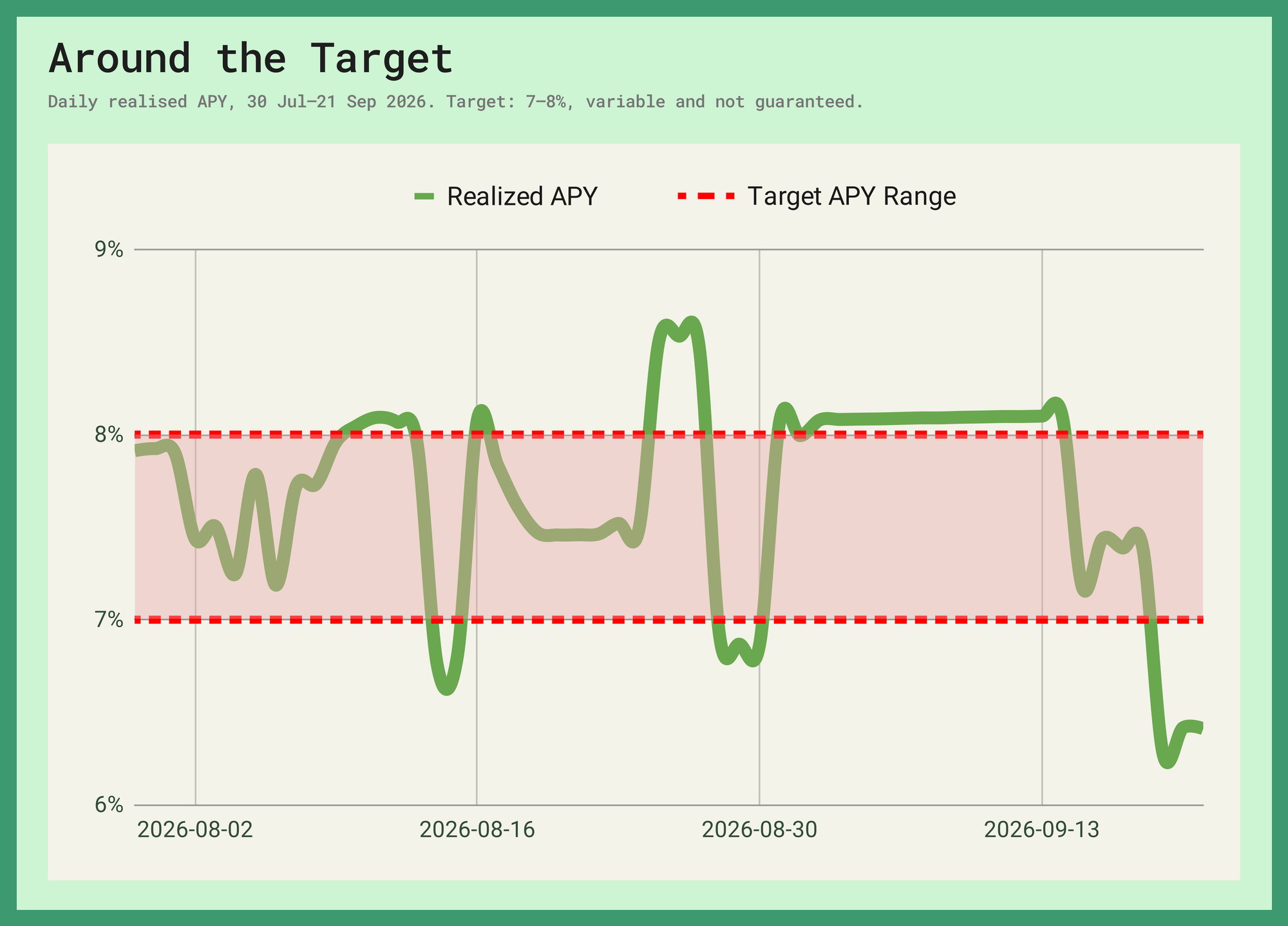
Although the line moves from day to day, it follows the return presented to depositors, while the Commodity Loans beneath it keep the rates agreed at origination for their full terms.
Those fixed terms also put the length of the public record in perspective. Fifty-four daily observations cover less than two months, still a short record against a typical 1–3 month Commodity Loan. The vault data alone cannot establish how the portfolio would respond if a buyer failed to pay, a replacement sale dragged on or withdrawal requests outran the available cash buffer. Portfolio reports may begin to fill in those gaps and give us reason to revisit the vault once more of its earliest loans have had time to mature.
The information provided is for general informational purposes only and does not constitute financial, investment, or legal advice. The content is based on sources believed to be reliable, but its accuracy, completeness, and timeliness cannot be guaranteed. Any reliance you place on the information in this document is at your own risk. On Chain Times may contain forward-looking statements that involve risks and uncertainties. Actual results may differ materially from those expressed or implied in such statements. The authors may or may not own positions in the assets or securities mentioned herein. They reserve the right to buy or sell any asset or security discussed at any time without notice. It is essential to consult with a qualified financial advisor or other professional to understand the risks and suitability of any investment decisions you may make. You are solely responsible for conducting your research and due diligence before making any investment choices. Past performance is not indicative of future results. The authors disclaim any liability for any direct, indirect, or consequential loss or damage arising from the use of this document or its content. By accessing On Chain Times, you agree to the terms of this disclaimer.