Eliminating The Institutional Custody Bottleneck
Borrow against it. Don't move it.


Disclaimer
This report is made in collaboration with Kamino and is therefore sponsored. All editorial decisions, opinions, and conclusions expressed are entirely those of our own and remain independent of any external influence.
Key Points
- Kamino and Anchorage let institutions borrow against custodied assets using synthetic "mirror tokens", with collateral never leaving the custodian.
- Pilot borrower Solana Company unlocks borrowing power on ~$201m in previously idle staked SOL.
- Digital asset treasuries hold ~$1.6B in SOL today, representing a sizable addressable market if the model proves out.
Introduction
Institutional capital has made countless headlines in recent years with grand acquisitions through digital asset treasuries and exchange-traded funds. However that exposure has largely remained behind lock and key. Investors can't borrow against these assets or put them to work in broader markets, a common practice in traditional finance, which is ironically even more streamlined and composable in its decentralized counterpart. The missing piece hasn't been capability, but infrastructure: custody arrangements, compliance frameworks, and operational controls that meet institutional standards without stripping away the benefits of being onchain.
"Institutions want access to the most efficient sources of onchain liquidity, but they aren’t willing to compromise on custody, compliance, or operational control." - Nathan McCauley, CEO and Co-Founder of Anchorage Digital
Kamino and Anchorage Digital's recent collateral management integration is effectively a verifiable custody wrapper solution that aims to eliminate the yield and oversight dilemma. Assets never leave the custodian, their value is attested onchain by a reputable data provider, and borrowing happens through bespoke lending markets built per borrower on the platform. How it manages to do so, and where the seams still show, is what the rest of this piece pulls apart.
Trichotomy
In traditional finance, tri-party arrangements are old plumbing. A custodian sits between two counterparties, holding collateral and managing risk so neither side has to fully trust the other. Repo markets, securities lending and prime brokerages have relied on this structure for decades. What Kamino has built borrows from the key principles, but diverges at execution.

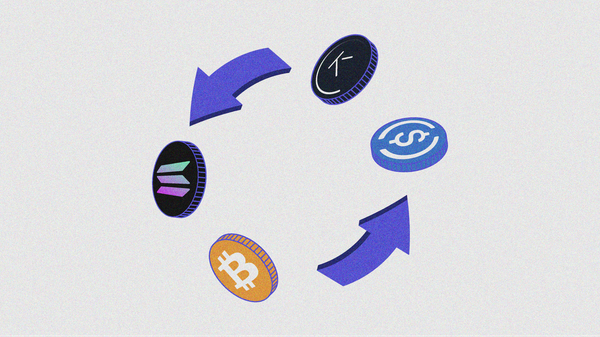
The foundation is called off-chain collateral, first outlined in a December 2025 governance post that laid out the protocol's pivot toward institutional infrastructure. The product was developed in collaboration with Chainlink and publicly debuted at Solana Accelerate APAC earlier this month, one day before the Anchorage partnership went live. Rather than requiring assets to be deposited into smart contracts, the system creates mirror tokens, which are synthetic representations of collateral that remains custodied off-chain at Anchorage Digital Bank. These tokens function as native deposits on the platform, unlocking borrowing power against assets that technically never leave the custodian.
The bridge between custodied reality and onchain representation is Chainlink's attestation layer, that enables continuous verification of collateral held by Anchorage on behalf of each borrower. This evidence is ultimately what gives the mirror tokens their legitimacy within the lending market. Without it, they're just plain IOU's backed by the middleman's good faith and nothing else. With it, they carry the economic weight of staked SOL, including the staking rewards that accrue periodically.

On the protocol side, each institutional borrower is given in Dawid Snyders' words, a "white-glove borrower" experience, with custom markets and loan parameters. Liquidity for the dedicated markets will likely be predominantly supplied through Kamino's lending vaults at the discretion of the curators, meaning stablecoin depositors on the platform are effectively the counterparty to institutional borrows.
Sitting above all of this is Atlas, Anchorage's collateral management engine. It provides around-the-clock automated loan-to-value monitoring, orchestrates margin and collateral movements when positions drift, and executes rule-based liquidations when thresholds are breached. For anyone familiar with how a prime broker manages a margin account, the operational model is immediately recognizable. The difference is that the lending market on the other side is transparent and settles in real time rather than one business day after the order execution date. The liquidation process itself, however, may not share that immediacy. On a standard Kamino market, liquidations are atomic, collateral is seized and sold within a single transaction. Here, the underlying assets sit with a custodian, and unwinding them likely involves operational steps that don't move at block speed. How that ends up looking, particularly in the face of volatility, remains to be seen.
In practice, an institutional entity stakes SOL with Anchorage Digital Bank, where it sits in a segregated account under a tripartite account control agreement. Chainlink attests to the custodied value on an ongoing basis. Mirror tokens backed by the aforementioned assets are issued and can be freely borrowed against in a dedicated Kamino Lend market. All positions are then actively monitored and managed by Atlas. At every point in this process, each action is innately auditable.

It's an elegant construction. It's also one built on a stack of trust assumptions that are worth pressure-testing before calling it a blueprint for anything.
From Treasury to Counterparty
Prior to this integration, the pilot borrower, Solana Company (NASDAQ: HSDT) a digital asset treasury with a mountain of staked SOL had exactly two options: sit on their hands and collect staking rewards, or sell. The assets were productive in the narrowest sense and idle in every other. There was no real opportunity to borrow against it without first moving it out of custody from BitGo, a non-negotiable for such an actor operating under a strict compliance framework.
Instead of watching the ecosystem they're so heavily invested in from the sidelines, they can now actively participate in it. Simply put, the mirror token mechanism gives them keys to Solana's onchain economy while retaining regulatory compliance. What they do with the borrowed assets isn't restricted to a sandbox. The full depth of Kamino's lending markets, Multiply loops, and yield strategies remains accessible.
The custodial perimeter constrains where the collateral lives, not what the borrowed capital can do. It mirrors how off-exchange settlement (OES) reshaped centralized trading. OES didn't change what institutions could trade, it changed where the assets sat while they traded. Custody-mirrored credit does the same for lending.
It's worth noting that this is, for now, a whitelisted arrangement. Solana Company didn't sign up through a self-service interface. The pilot involves a bespoke market with custom parameters, negotiated terms and coordinated onboarding between Kamino, Anchorage and the borrower. A process that is closer to a structured credit facility than a permissionless protocol interaction.
The Bigger Picture
For Kamino, the arithmetic is straightforward. Every institutional borrower onboarded through the custody-mirrored credit program has the potential to significantly increase TVL and generate additional protocol revenue by tapping into a pool of capital that until now remained unavailable. Connecting this additional resource pipeline to its existing retail flow, from their position is a massive win on the business front.

Today, digital asset treasuries with publicly disclosed reserves are in possession of approximately ~$1.6b worth of SOL at current prices. While they don't make up the total addressable market, these entities are by far the most likely candidates to capitalize on the newfound opportunity. Alternatively, exchange-traded funds could also be valid prospects, although that might be a tougher sell due to regulatory considerations (issuers had to already fight tooth and nail for staking) and investor expectations.

Nonetheless, even capturing a small chunk of the ~$766.9m market would be a step forward, as it could set a strong precedent for asset managers in the future to explore and consider using permissionless applications on Solana.
Off-chain collateral is also just one piece of a broader shift for the protocol, that in a sense, serves as a gateway. Fixed-rate borrowing, private credit vaults, a real-world assets exchange, and the plug-and-play BuildKit are all designed around the same thesis. That the next wave of meaningful expansion will be driven by participants who need more than traditional floating-rate lending pools and memecoin markets. An institution that enters through custody-mirrored credit today has a natural path into fixed-rate borrows, tokenized asset exposure, and structured yield strategies tomorrow. The product surface area creates stickiness that a single integration never could.
It's evident that the potential for growth is massive on the demand side; however it takes two to tango. Without sufficient supply to absorb that demand, the full impact of this development might not be realized. The pilot program serves as a litmus test for both sides of the market, not just whether institutions will borrow, but whether lenders are willing to back positions collateralized by a yet unproven asset type.
Conclusion
For years, the institutional playbook for crypto exposure has been fairly one-dimensional, accumulate through treasuries and ETFs, custody the assets and stop there. Kamino and Anchorage's collaboration is the first of its kind attempt at making that value more flexible without requiring any compromises. Whether it scales beyond bespoke pilot programs and survives its first real stress test remains to be seen. But the lock and key are still there, the key just opens more than one door now.
The information provided is for general informational purposes only and does not constitute financial, investment, or legal advice. The content is based on sources believed to be reliable, but its accuracy, completeness, and timeliness cannot be guaranteed. Any reliance you place on the information in this document is at your own risk. On Chain Times may contain forward-looking statements that involve risks and uncertainties. Actual results may differ materially from those expressed or implied in such statements. The authors may or may not own positions in the assets or securities mentioned herein. They reserve the right to buy or sell any asset or security discussed at any time without notice. It is essential to consult with a qualified financial advisor or other professional to understand the risks and suitability of any investment decisions you may make. You are solely responsible for conducting your research and due diligence before making any investment choices. Past performance is not indicative of future results. The authors disclaim any liability for any direct, indirect, or consequential loss or damage arising from the use of this document or its content. By accessing On Chain Times, you agree to the terms of this disclaimer.